
Popular Posts



An ADHD Book Recommendation, Reading Hack, and Mindset Shift.
This week, I share with you an awesome ADHD book recommendation plus a tip for reading as an ADHDher.
I'm also going to offer you a new thought to replace the common thought many women with ADHD have about the books they've started and stopped without finishing.
Let's go…

Why Naming Your Emotions Matters (Plus a FREE Emotional Vocabulary Guide)
When you name something — a feeling, a fear, a sensation in your body — your nervous system exhales.
Not metaphorically. Literally.
(Stay tuned to the end of this post for your free Emotional Vocabulary Guide).
There's a reason why grounding techniques (the "name 5 things you can see" kind) actually work. It's not a distraction trick.
When you direct attention toward your environment and label what you observe, you activate the prefrontal cortex — the thinking, reasoning part of your brain — and it literally turns down the volume on your amygdala, which is the part that's been hitting the panic button.
Naming things pulls you out of the threat response and back into the present moment. It's one of the fastest ways to shift your state.
And here's where it gets really interesting.
This isn't just about grounding exercises. Humans have always known, on some level, that naming things matters. Some cultures name their food before eating it. Many traditions include blessing or acknowledging a meal — not just as a ritual, but as an act of presence. It says: I see this. I'm grateful for what had to happen to bring this to me. I'm HERE.
Naming is how we make meaning. It's how we arrive.

Regulating Your Nervous System as a Woman with ADHD
There’s something that's not talked about enough in the ADHD space, especially for women.
The need to regulate your nervous system.
And I do mean NEED!
When you've gone your whole life trying to function in societal frameworks that weren't made for your brain or body, it's like living full throttle all…the…time (Even when full throttle is internal and looks like lack of action on the outside).
As women with ADHD we have to think harder, strategize, mask, and compensate just to survive. Not to mention the fact that we're often responsible for the needs of others on top of our own.
Pair all of that with ever changing hormones and you've got a nervous system on constant high alert which takes its toll mentally and physically.
After all, high alert is a survival mode and is meant to be an occasional setting, not a way of life.
Communicating when you have ADHD is harder than it looks
Here are some of the ways ADHD makes communicating and interacting with others harder than it looks.
Listening requires a lot of effort. Staying present in a conversation, tracking the threads of topics, and suppressing the impulse to interrupt is draining.
You can't find the word you need when conversing in spite of your rather extensive vocabulary. ADHD affects working memory and creates retrieval failures (add brain fog to that and Oy!)
Tone is hard to read and hard to control. ADHD affects the way emotion is expressed. You can come across as flat, too intense, or just emotionally mismatched (like my examples above).One of the reasons we fly under the radar is because we've been forced to get really good at masking and over compensating to seem “normal” and “successful”. Quite the catch 22. (continued)
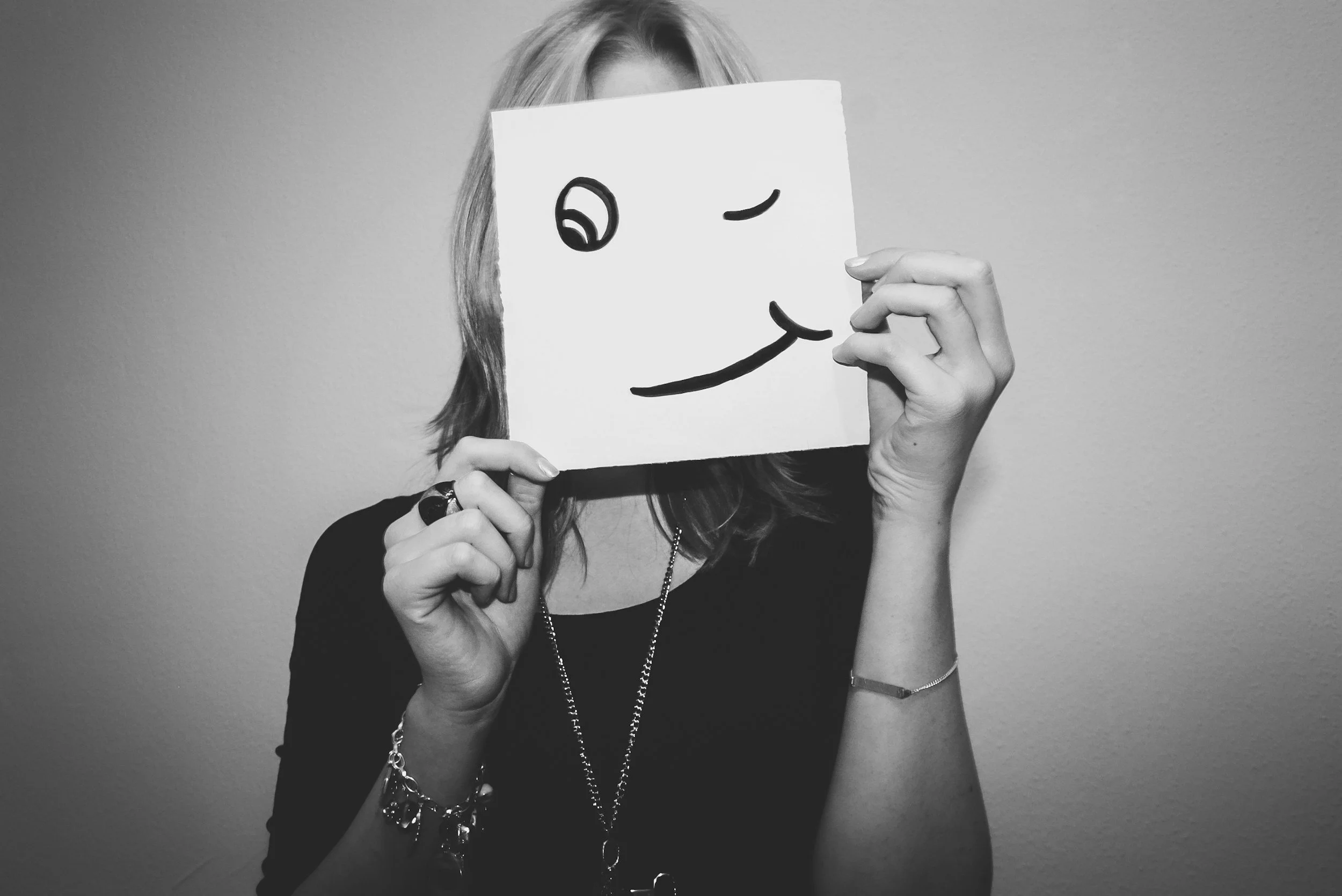
Hidden ADHD Symptoms in Women
Doctors (including many psychiatrists) who go through years and years of studying often don't know that ADHD looks different in women or they know the text book explanation but not what it actually LOOKS like in real life.
Though I've seen improvement over the past decade, ADHD women are still being overlooked. Our symptoms are hidden in plain sight.
One of the reasons we fly under the radar is because we've been forced to get really good at masking and over compensating to seem “normal” and “successful”. Quite the catch 22.
One of the best things you can do as a woman with ADHD is to learn what ADHD looks like for you and what symptoms you experience.
After all, how do you work with or take control of something you don't understand?
So, Let's take a look at some of the most commonly overlooked signs of ADHD in women (How many do you relate to?).

A Strategy for Those Harder Than Usual Days.
As a woman with ADHD in my forties, my hormones, moods, energy levels, mental clarity, and ADHD symptoms feel more unpredictable than ever.
This means that I have more and more days that blindside me with challenges. Days that feel extra hard for no apparent reason.
So what do you do when you never know what surprise, grab bag of symptoms you're going to get from day to day? What do you do with that unpredictability?
You bring the predictability. You create a set of rules or guidelines for days like this. A strategy of simplicity, intentionality, self compassion, and self care for these surprise days.
So what does this look like in real life?
Well today is a perfect day for me to give you a glimpse into what this looks like fore me because today has been rough my friends.
At first I was on autopilot and letting my brain ruminate on how hard things feel and how I should be doing more and doing better than I am.
When I noticed this spiral of decent into despair and defeat…
I paused and breathed in deeply and reminded myself that I knew what to do in times like this. Here’s what I did…